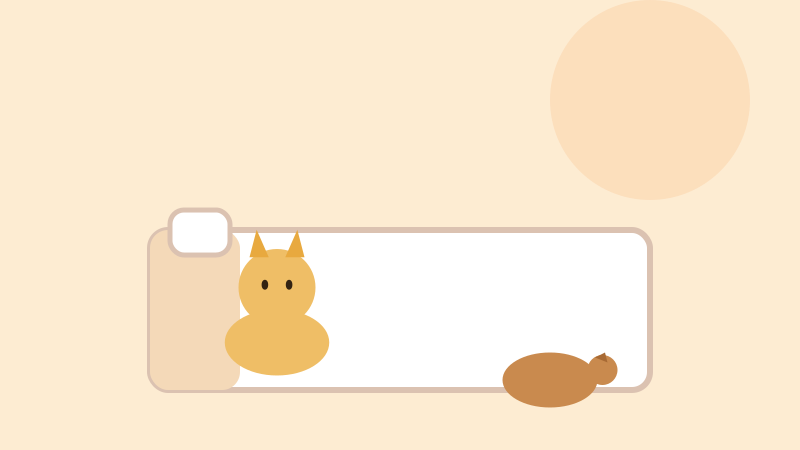
Short answer: sleeping by your head is mostly about attachment and feeling safe, while sleeping at your feet is more about keeping some distance while still sharing warmth without being disturbed by your movements — so where a cat chooses to sleep can hint at how close they feel to you and their general personality.
Why do cats sleep near your head?
① To feel secure by staying close to your scent and breathing ② Because they treat a strongly attached person like part of their group and want to stay close ③ The area around the pillow is an elevated spot with a good view ④ It's often where warmth collects the most. These four reasons usually combine.
What does it mean when a cat sleeps at your feet?
Sleeping at your feet is more like a buffer zone — close enough to share some warmth, but far enough that they won't be bothered much when you toss and turn. Cats that are attached but somewhat independent, or that find sleeping right next to your face too much, tend to prefer the foot of the bed.
What's the core difference between the two positions?
It comes down to distance. Sleeping close to your face signals very low guardedness and high trust, while choosing your feet suggests trust is there too, but they'd rather keep a bit of personal space. Both are still expressions of affection.
What if the sleeping spot keeps changing?
Shifting spots based on the season, room temperature, household noise, or light direction is completely normal. But if a cat suddenly changes position and starts avoiding you more than usual, it could signal a change in condition or stress, so it's worth watching for a few days.
Is it hygienic to let a cat sleep on the bed?
As long as you wash your sheets and pillowcases regularly and keep your cat's paws and litter area clean, it's generally fine. If someone in the household has allergies, though, it's a good idea to wash bedding more often.